





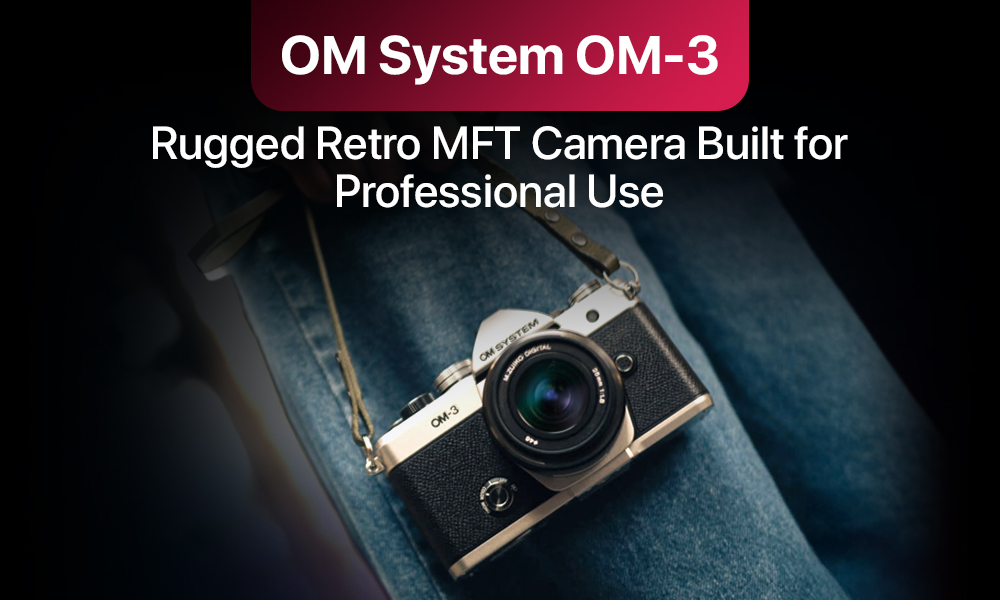
The OM System OM-3 blends classic looks with modern power. It takes the familiar charm of the old OM film bodies and pairs it with fast autofocus, deep stabilization, and weather protection that laughs at rain, dust, and cold mornings. If you shoot outdoors, travel often, or split your time between stills and video, this is a camera that feels built for the way you work in 2025.
Why the OM-3 design still matters
The OM name carries real weight for photographers. Those small, tactile film bodies were known for being tough, discreet, and easy to handle for long days in the field. The OM-3 nods to that past with metal construction, physical controls, and a clean top plate. Under the skin, it is a modern tool.
The menus are tidy, the grip is deeper than it looks in photos, and the body is sealed against windblown grit and a sudden downpour. That mix of feel and function keeps you shooting when the weather turns, and the light finally gets interesting.
If you are moving up from a phone or stepping sideways from a larger full-frame kit, the first impression is how compact it is. You can carry an OM-3 body and two MFT primes in the space a single big zoom would take in other systems. That size advantage is the quietly powerful part of Micro Four Thirds. You pack more options, walk farther, and stay ready longer.
What the OM-3 brings to the table
Rugged build and weather sealing: The shell is magnesium alloy with gaskets around the doors and buttons. OM System rates the body to IP53. In plain terms, it resists dust and rain and keeps working from cold, predawn hikes through hot, windy afternoons. The shutter keeps clicking in a drizzle. The sensor has a vibration filter that shakes off dust when you swap lenses.
A fast 20 MP stacked sensor: Resolution is set at 20 megapixels, which sounds modest next to some high-count rivals. The stacked BSI design is the key here. Readout is faster, rolling-shutter artifacts are lower, and autofocus has more data to work with. Files are flexible and clean at typical outdoor ISOs. For landscapes and product work, the high-resolution modes lift you to 50 MP handheld or 80 MP on a tripod, which is plenty for large prints.
TruePic X processing: The processor unlocks the computational tricks OM shooters love. Live ND lets you blur water and clouds without physical filters. Live Composite builds long exposures from bright additions, so car trails and star trails are fun and forgiving. Focus stacking in camera makes macro work easier. These are not gimmicks. They save time in the field and reduce the number of accessories you carry.
Stabilization that changes what you attempt: The five-axis in-body system is rated up to 7.5 stops with supported lenses. In practice, you shoot at slower shutter speeds than you thought possible. Forest walks, museums, and evening city scenes stay sharp without a tripod. Video benefits too. Handheld clips look smooth when you do not want to rig a gimbal.
Autofocus that understands subjects: The OM-3 covers the frame with AF points and adds subject recognition for people, vehicles, birds, and other animals. It finds eyes quickly and holds focus on erratic movement better than older bodies. If you shoot birds or small wildlife with long MFT lenses, the keeper rate jumps, and the camera feels like a partner rather than a limit.
Thoughtful handling: The camera sits well in the hand. The front and rear dials are placed where your fingers rest, and the function buttons are easy to reach with gloves. The EVF is bright and responsive. The rear screen tilts and rotates to help you compose low, high, and vertical angles without putting your knees in the mud.
Storage and memory, at a glance
Choosing the right card setup matters for bursts, high-bitrate video, and reliable backup in the field. The OM-3 gives you flexibility with two slots. Here is the quick reference.
| Item | Slot 1 | Slot 2 | Recommended Use | Notes |
| Type | CFexpress Type B | SD (SDHC/SDXC) | Slot 1 for primary capture when shooting long bursts or 4K60 video. Slot 2 for backup or overflow. | CFexpress delivers high sustained writes for action and video. SD adds compatibility and lower media cost. |
| Speed class | PCIe NVMe | UHS-II (UHS-I compatible) | Use the fastest card you can justify in Slot 1. Use UHS-II V90 or V60 for Slot 2 if you record video to both. | Mixing a fast CFexpress with a solid UHS-II card keeps the workflow smooth. |
| Typical roles | RAW bursts, high bitrate video, primary slot | Redundant recording, JPEG mirroring, proxy or overflow | If redundancy is critical, set simultaneous writing. If speed is critical, set overflow from Slot 1 to Slot 2. | Redundancy protects client work. Overflow helps long events. |
| Capacity tips | 256 GB to 1 TB | 128 GB to 512 GB | Match card size to the day. Bring two smaller cards rather than one huge card for safety. | Always format in-camera after a verified backup. |
Stills performance in the real world
Speed and bursts. The OM-3 can fire mechanical bursts at modest frame rates with continuous tracking, or sprint at very high speeds with an electronic shutter. The stacked sensor helps reduce rolling shutter at those top speeds, which is important for tennis, birds in flight, or panning traffic. Battery life is solid for a day of stills if you keep the EVF brightness sensible and avoid long review sessions.
Image quality. You get clean, detailed files at base ISO with pleasing color and well-controlled noise up through mid ISOs. Dynamic range is good for an MFT sensor. You can lift shadows a stop or two in raw without the image falling apart. Skies hold color. Greens look natural. Skin tones grade well. The high-resolution modes are worth using when the subject allows. Handheld 50 MP shots tighten up fine texture in foliage, fabric, and architecture.
Lenses and reach. The Micro Four Thirds catalog is a major part of the system’s appeal. The 300 mm f/4, 40-150 mm f/2.8, and small primes like the 20 mm f/1.4 give you a wide range of looks with compact footprints. Because of the crop factor, you carry more reach in less space. That matters on hikes, city walks, and travel days when you do not want a heavy pack.
Video tools that are ready for field work
The OM-3 records 4K in DCI and UHD up to 60p with 10-bit internal options. Profiles such as OM-Log400 and HLG give you room to grade. The stabilization is excellent for handheld B-roll, cutaways, and documentary style clips. Zebra patterns and a front tally light make monitoring easier. There is support for vertical video if you are delivering for social platforms.
Autofocus during video is smooth and usable. Subject detection helps with faces and birds, though like any contrast in changing light, you should test your settings before a paid shoot. Pair the body with a quiet, linear focus lens, and you get a compact video kit that fits where larger setups do not.
If you plan to record high-bitrate footage or long takes, use the CFexpress slot and fast media. Keep an eye on card temperatures during summer shoots and leave space around the body for airflow when you can.
Who will love the OM-3
Outdoor and wildlife shooters. Weather sealing, small lenses with real reach, and powerful stabilization make this a smart choice for hikes, boats, and blinds. Subject recognition for birds and animals is a real help, and the lighter kit means you react faster when something moves.
Travel photographers and filmmakers. The weight and size savings add up when you carry your gear all day. Dual slots let you make a backup as you shoot. USB-C power delivery keeps you running from a power bank on trains and in airports.
Action and sports enthusiasts. The high burst rates and quick AF tracking grab decisive moments. The buffer clears fast to CFexpress. You spend less time waiting and more time shooting.
Hybrid creators. If your week includes stills for a client, short social video, and a personal project, the feature set supports all three. The camera is quick to set up for separate jobs, and the files drop into common editing tools without fuss.
Working pros who need a second body. Use the OM-3 as a reliable sidekick to a larger primary system. It covers wide to short telephoto angles with small primes and can take a beating in tough conditions, so your main body stays protected.
Practical buying and setup advice
- Cards and readers: Start with a 256 GB or 512 GB CFexpress Type B from a known brand and a 128 GB or 256 GB UHS-II SD card for backup. Pick up a dual-slot USB-C reader to speed your offloads.
- Redundancy: On paid work, set simultaneous recording. For personal projects and long events, switch to overflow. Confirm settings with a quick test before you leave home.
- Custom controls: Map AF-ON to a rear button for back button focus. Assign subject detection toggle to a function button. Put high res and Live ND on the quick menu.
- Battery habits: Carry a spare battery. Turn down EVF brightness a notch and shorten image review to stretch a day.
- Cleaning and care: The sensor shake filter helps, but pack a small rocket blower for field dust. Keep your gaskets clean, and the card door latched fully to preserve sealing.
Where the OM-3 fits among rivals
Full-frame cameras deliver higher native resolution and a shallower depth of field. They also weigh more and cost more, especially when you add stabilized telephotos. APS-C bodies can meet you in the middle but may lack the weather rating and unique computational modes OM offers. The OM-3 wins on durability per gram, stabilization, and the strength of the MFT lens lineup for travel and wildlife. If your print sizes are moderate and you value mobility and reliability, it hits the right notes.
FAQs
For most outdoor, travel, and event work, yes. Files print well at common sizes and look great on high resolution screens. Use the high-res modes when you need more detail and your subject is steady.
If you shoot action, birds, sports, or high bitrate 4K, use CFexpress for the main slot. If you shoot slower paced stills or moderate bitrate video, a fast UHS-II SD in the second slot is fine as a backup and for overflow.
It is strong for people and very good for birds and animals in clean backgrounds. As with any AF system, learn which case and sensitivity settings match your subjects and light.
Treat the IP53 rating as confidence, not a license to dunk the camera. Wipe down the body after salt spray or heavy rain. Keep the card and battery doors free of grit so the seals seat properly.
